Showing posts with label education. Show all posts

Wednesday, December 29, 2010

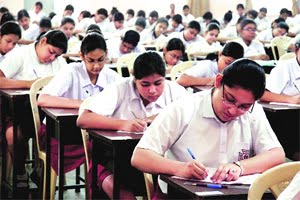
No Boards Tension, Grades made it easier, students just preparing half of syllabus

Extended to Class X from this year, CCE has students studying for exams throughout the year instead of annual Boards

DHRUV Sharma, a Class X student of a school in Southwest Delhi, is preparing for his “term-ending” examination in March next year. Unlike earlier batches of Class X students who had to prepare for the entire syllabus for their Board exams, Dhruv is preparing for only half of the syllabus in all subjects.

Like Dhruv, thousands of Class X students across the Capital are upbeat about the upcoming exams, thanks to the reduced syllabus. This is the first batch of Class X students who were evaluated by the Continuous and Comprehensive Evaluation (CCE) Scheme, introduced by the Central Board of Secondary Education (CBSE) last year in Class IX and later extended to Class X.

“For the upcoming exams, the pressure to score high marks is not there, and the syllabus is half,” says Dhruv, student of Bal Bharati Public School, Dwarka. “But I had to study consistently through the year.”

Under the CCE Scheme, an academic year is divided into two terms — each has two formative assessments and a term-ending summative assessment (FA1, FA2 and SA1 in the first term, and FA3, FA4 and SA2 in the second term). Students are thus evaluated throughout the year.

The CCE also mandates that students be graded in all subjects. Says Akshita Khetrapal, a Class X student appearing for FA4 at her school in Dwarka, “Grades have made it easier. The stress is lower.”

Last year, while Class X students were awarded grades and grade points in each subject, they had to prepare for the whole syllabus. This year is different, and the students and their parents are more relaxed.

Says Mohini Bindra, principal of Ramjas School Pusa Road, “Class X students never participated in annual day functions earlier, but things have changed. This year, the whole class participated.” That might, however, have more to do with the fact that students are being graded not only in subjects, but also in co-scholastic areas — life skills, attitude toward teachers and schoolmates, and participation in school programmes and other activities. For the FAs, students were also given projects in different subjects throughout the year.

D K Bedi, principal of Apeejay School, Pitampura, says, “By December-end, parents of Class X students used to put a lot of pressure on them. That is gone now. Students are more relaxed.” He adds, “Also, since students have already appeared for FA3 in their second term and are left with FA4 and SA2, there is a lot less to prepare for.”

Usha Ram, principal of Laxman Public School, Hauz Khas, says, “Students are less burdened this time round. But we will hold a small pre-test before SA2 in our school so that students do not take their studies lightly.”

Some students, however, feel the earlier pattern was better. “I got the chance to revise the entire syllabus and brush up the topics I was weak in,” says Akshita. “Trigonometry, for example, was in our first term, in which I did not do well. It is included in the syllabi of Classes XI and XII. I wanted to revise the subject before going to Class XI. But now I don’t have that chance.”

Grades

The report card has three sections

Scholastic Areas: Divided into two parts — 1A (subjects) and 1B (work experience, art education, physical and health education.

* Scores in 1A are awarded on a nine-point scale.

* Students getting 91-100 per cent in a subject are awarded A1 grade and a grade point of 10.

* Students getting 81-90 per cent get A1 and a grade point of 9.

* Student getting 71-80 per cent get B1 and a grade point of 8.

Co-scholastic areas

Divided into 2A and 2B

Comprise

A: Life Skills: Thinking skills; social skills; emotional skills

B: Attitudes and Values: Towards teachers; schoolmates; school programmes; environment value systems

Co-Scholastic activities

3A and 3B. Any activity (like literary skills, music; Physical and Health Education.

Comprise:

Literary and creative skills; scientific skills; aesthetic and performing skills; clubs (eco clubs, health and wellness and others)

* Students also get a Cumulative Grade Point Average (CGPA) at the end of the academic year. They can calculate their approximate percentage in a subject by multiplying the grade point scored in that subject with a factor of 9.5.

No failures

The practice of declaring compartment/fail has been discontinued. Candidates who obtain qualifying grades (D and above) in all subjects, excluding the additional subject, has to be given a qualifying certificate. Candidates who obtain grade E1 or E2 in a subject are told to improve their performance through five subsequent attempts. Those who do not get qualifying grades in all subjects, excluding the additional subject, are not permitted to continue to Class XI.:


Wednesday, December 15, 2010

Colleges must refund admission fee

The issue of not refunding admission fee plagues not only schools but professional colleges as well. All India Council of Technical Education (AICTE) as well as the admission committee for professional courses have ruled that colleges should refund fee to students deducting only Rs 1,000 as processing fee. There is no framework of rules on the issues for the schools though.

District Education Officer of Ahmedabad R I Patel said that there is no rule on the fee refunding issue. "AICTE gives out a public notice every year making the students aware that if they seek admission in another college, the college where they first took admission should refund the fee deducting only Rs 1,000 as processing fee. This is applicable until the college is able to fill the seat vacated with another student," said member of the admission committee, M N Patel.

Patel said that nearly 5,000 engineering, pharmacy and medical seats in professional courses are reshuffled and the committee keeps the fee with itself until the entire reshuffling process is not complete so as to avoid any inconvenience to students. "There are still lot of complaints from students who secure a seat in the management quota and many colleges do not refund them saying the fee was non-refundable. The students and colleges should be aware of decisions taken by professional committees and councils," Patel said. (TOI)

Friday, November 19, 2010

Law to ensure all go from primary to higher secondary education, Sibal

The Government may come up with a law in the coming years to make sure that all children "must" go from elementary to higher secondary education which is vital for the future of the country, HRD minister Kapil Sibal said.

He said that while the Right To Education has now become a fundamental right, a similar move is crucial for the secondary education so that there is a critical mass at the university level who will create wealth for the country.

"Hopefully this Government in years to come will make sure that there is another law passed that all children must go from elementary to higher secondary education," he said at the Hindustan Times leadership summit here.

He said the results emerging out of this would be that by 2020 "we must have at least 30 per cent Gross Enrolment Ratio instead of 12.4 per cent... which means the 14 million who go to college now would go up to 45 million. That will create the critical mass of people moving to university," he said.

Sibal said unless that physical mass of people move into the college system, the nation will not have the kind of intangible wealth it needs to produce the kind of wealth that will than be translated into products by industry.

Laying emphasis on skill development, he also said before next year a 'national vocational qualification framework' will be put in place with provisions that in next three years children will get CBSE vocational degree in whatever vocation they aspire to study.

He said vocational education should start from class VIII onwards and if "CBSE gives academic degree, it should also give vocational degree".

Taking a dig at the private engineering colleges over the standard of teaching imparted by them, he said most of these institutes boast of "under the table quality" standard.

"When we go towards the higher education sector, the ballgame is entirely different. Ninety per cent of the engineering colleges are set up by private sector and you know what...there are some quality institutions in the private sector but by and large its under the table quality".

He also dismissed suggestion that industry should be given incentives to invest in education sector.

"I am deeply disappointed by that question that industry is asking for incentives to invest in our children's future," he said.

He also ruled out fears that cost of education will go up, saying 93 per cent of the education infrastructure in the country lies in public sector. However, he said, one of the problems afflicting the sector is non-availability of quality teachers. (TOI)

Friday, November 12, 2010

Getting education is difficult for Indian kids

Despite the Right to Education Act, access to education is an everyday struggle for many Indian kids because of challenges like inaccessibility to schools and unavailability of teachers. At a conference organised by child rights group, CRY, in the capital Thursday, six children from rural areas of states like Rajasthan, Uttar Pradesh and Madhya Pradesh spoke about the everyday challenges they have to face to go to school.

Sunil Chandelkar, a 12-year-old boy from Madhya Pradesh, said the biggest challenge for him to go to school is the distance.

"The RTE Act talks about compulsory education to children between the age six and 14 which means up to class eight. But our village school has classes only till fifth standard and after that we have to go to the upper primary school in the next village which is more than three km away," Chandelkar said.

"There are private school buses but they refuse to take us because we can't pay such high amount. So we decided to write to the education minister of the state. We then had a meeting with the private bus owners and now the matter has been resolved," he added.

According to a 2009 report, there are 17,282 eligible habitations which don't have a primary school within a one kilometre radius. Uttar Pradesh leads the pack with 7,568 school-less habitations.

In addition to that, there are 26,513 habitations which don't have an upper primary school within a three km radius.

Mahendra Singh, another child from Rajasthan, said unavailability of teachers in his school is the biggest challenge. Singh is also the head of the Bal Panchayat, a body comprising of children which takes up issues concerning kids like them.

"Our village school had only three teachers for 500 kids. Despite repeated requests to the district officials, nothing changed. Finally we kids went on the road and stopped the traffic, demanding our voices be heard. Only then did the officials wake up and within a week we had three new teachers," Singh said.

For Chanda, a 15-year-old girl from Uttar Pradesh, the challenge was from within her family. Her mother wanted to marry her off but she resisted and refused to eat anything in protest.

"But that did not work. So then I approached the Bal Panchayat of my village and after discussing the matter, I tried to talk to my mother and make her understand that education could help me stand on my feet. That worked and now she encourages me to study hard," she said.

According to CRY, more than 80 lakh children in the age group of six to 14 are out of school.(HT)

Thursday, September 16, 2010

Optional Proficiency Test for CBSE 10th

CBSE, taking another step toward improving schooling examination system for class tenth. From next year onwards, CBSE decided to take optional proficiency test in all five subjects for class tenth. Before this CBSE had implemented grades and CCE in place of marks for class10.
It is proposed that exams for English, Hindi, Social Science, Mathematics and Science subjects might be in May or June next year. Student can appear in one or more than one subject of their choice in exams. The format will be implementing on the same day in all schools across the country. For appearing in the exams students have to pay fees up to Rs 500 to 1000. A joint certificate from CBSE Board and from exam conducting agency will be provided to the students who will appear in the exam.

The exam will be of 100 marks for each subject and duration of the exam will be two and a half hours. The questions will be multiple choices in which only one answer will be a correct and negative mark for wrong answers will be provided. The question will be asked in the examination will be of 9th and 10th class based on the CBSE curriculum. There will no relation of questions from previous exams of CBSE. CBSE Chairman Vineet Joshi said: "The purpose of ‘Optional Proficiency Test’ for students is to develop their creative skills, mental capacity, practical understanding of various subjects, to understand figures and maps”.

Tags

CBSE (17) AIEEE (7) IIM (7) IIT (7) MBA (7) IGNOU (6) education (5) AICTE (3) CBSE exams (3) Entrance exam (3) IGNOU Course (3) UPSC (3) AFMC (2) AIMA (2) All India Management Association (2) CAT (2) CBSE board (2) CET (2) Common Admission Test (2) Faculty of Management Studies (2) ICSE (2) IGNOU OPENMAT (2) IIT-JEE (2) Kapil sibal (2) Union Public Service Commission (2) class X (2) common entrance test (2) engineering (2) engineering entrance (2) AIEEE -2011 (1) AIEEE Online (1) AILET (1) AIMNET (1) AIMNET-20011 (1) AIPMT (1) Admission in B.Com (accountancy and finance) (1) All India Law Entrance Test 2011 (1) Asia Pacific Institute of Management New Delhi (1) BITS (1) BITSAT-2011 (1) BSNL (1) Bachelor in Architecture (1) Bachelor in Design (1) CBSE Date Sheet (1) CBSE MCQ (1) CBSE Schools (1) CBSE- conducted examination (1) CBSE-FAQ (1) CCE (1) CLAT 2011 (1) CS 2011 (1) CSAT (1) CSAT 2011 (1) Central Board of Secondary Education (1) China (1) Civil Service Aptitude Test (1) Common Law Admission Test (1) Compartment exam date for class XII and X (1) Education Fair (1) Education Worldwide India (1) Education Worldwide India fair (1) Eduniversal (1) Engineering Services Examination (1) FCI (1) FIITJEE (1) FMS (1) FMS Entrance exam 2011 (1) Film making courses (1) Food Corporation of India (1) GMAT (1) Guru Gobind Singh Indraprastha University (1) ICSE Examinations 2011 (1) ICSE board (1) ICSE schools (1) IGNOU OPENDEN (1) IGNOU Open Management Admission Test (1) IIFT (1) IIFT 2011 (1) IIM Bangalore (1) IIM Trichy (1) IIM-Indore (1) IIM-Rohtak (1) IIT Delhi (1) IIT Delhi JMET 2011 Result (1) IIT Joint Admission Test for M.Sc (1) IIT Rajasthan (1) IIT-Kharagpur (1) IIT-kanpur (1) IMI (1) INDRAPRASTHA UNIVERSITY (1) IPU CET 2011 (1) ISC (1) Improvement for Class XII (1) Indian Institute of Foreign Trade (1) Indian Institute of Management (1) Indian schools (1) Institute of Company Secretaries (1) International Education (1) International Management Institute (1) JAM (1) JEE-2010 (1) MAT 2011 (1) MBBS common entrance test (1) Mass communication (1) Media course (1) Medical (1) Merchant Navy (1) Merchant Navy exam (1) NATA (1) NATIONAL COUNCIL FOR HOTEL MANAGEMENT AND CATERING TECHNOLOGY (1) NCHMCT (1) NCHMCT JEE (1) NDIM (1) NDIM 2011 (1) NIT (1) National Aptitude Test in Architecture (1) National Law University (1) New Delhi Institute of Management (1) PDPU (1) PDPU B-tech Programme (1) PGPMX (1) PGPMX admission (1) PMET 2011 (1) Pandit Deendayal Petroleum University (1) Physics paper (1) Post Graduate Program in Management for Executives (1) Pune University (1) Pune University 2011 MCA Entrance Exam (1) Punjab Medical Entrance Test (1) SA2 exam (1) SCHOOL OF PLANNING AND ARCHITECTURE (1) SGAI exam (1) SPA 2011 (1) Source of Foreign Students (1) Students Global Aptitude Index (1) Top 10 Commerce Colleges (1) Top 10 Engineering Colleges (1) Top 10 Fashion Technology Colleges (1) Top 10 Hotel Management Colleges (1) Top 10 MBA Colleges / B-schools (1) Top 10 Medical Colleges (1) UP Board (1) UP Board Exam Date sheet 2011 (1) UP Board Exam Time table 2011 (1) UPES-MET 2011 (1) UPSC Civil Services examination (1) University of Petroleum and Energy studies (1) University of Pune (1) VEE exam 2011 (1) VIT Engineering Entrance Examination (1) VITEEE-2011 (1) Vellore Institute of Technology (1) Vels University (1) XLRI (1) XLRI Jamshedpur (1) admission into schools (1) applications for AIPMT (1) blind students (1) educational (1) educational institutions (1) inaccessibility to schools (1) international students (1) parental educational qualifications (1) question papers of class 12 (1) students (1) summative assessment (1) unavailability of teachers (1) visually challenged students (1)